
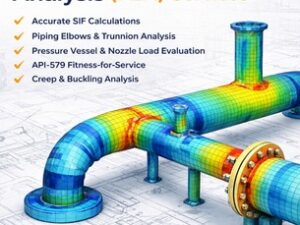
FEA Nozzle analysis Services refer to the application of finite element analysis techniques to evaluate the structural behavior of nozzles in pressure vessels and piping systems. These nozzles are critical junction points where stress concentrations often occur due to internal pressure, thermal expansion, and external loads. Engineers rely on advanced simulations to ensure these components can withstand demanding industrial conditions without failure.
In industries such as oil and gas, manufacturing, and power generation, nozzle failures can lead to costly downtime and safety hazards. This is why companies increasingly depend on expert consultancies like Little P.Eng. Engineering to perform detailed analysis. By using high-end simulation tools, engineers can predict potential weaknesses and optimize designs before physical implementation.
Importance in Industrial Engineering Applications
Nozzle analysis plays a vital role in ensuring the reliability and safety of complex systems. Pressure vessels and pipelines operate under extreme conditions, and even minor design flaws can result in catastrophic outcomes. By applying FEA Nozzle analysis Services, engineers can identify stress distribution patterns and ensure compliance with international engineering standards.
Another important aspect is cost efficiency. Early detection of design issues through simulation eliminates the need for expensive modifications later in the project lifecycle. Companies that invest in professional services like those offered by Little P.Eng. Engineering benefit from optimized designs that enhance both performance and longevity of industrial assets.
Key Components of Nozzle Analysis
The process of nozzle analysis involves evaluating various factors such as internal pressure, external loads, thermal stresses, and material properties. Engineers create detailed models that simulate real-world operating conditions to understand how the nozzle will behave under different scenarios. This comprehensive approach ensures that all possible stress factors are accounted for.
Material selection also plays a significant role in analysis. Different materials respond differently to stress and temperature changes, and selecting the wrong one can compromise system integrity. Through FEA Nozzle analysis Services, engineers can test multiple materials virtually and choose the most suitable option for specific industrial applications.
Role of Simulation in Modern Engineering
Simulation has revolutionized the way engineers approach complex problems. Instead of relying solely on theoretical calculations, modern tools allow for precise modeling of real-world conditions. This enables engineers to visualize stress concentrations and deformation patterns with high accuracy.
By integrating simulation into the design process, companies can significantly reduce risks and improve efficiency. FEA Nozzle analysis Services provide actionable insights that help engineers refine designs, ensuring that systems meet both safety and performance requirements without unnecessary overdesign.
Applications Across Industries
Different industries have unique requirements when it comes to nozzle design and analysis. In the oil and gas sector, nozzles must withstand high pressures and corrosive environments, while in power plants, thermal stresses are a major concern. Each application requires a tailored approach to ensure optimal performance.
Manufacturing industries also benefit from advanced analysis techniques. By using FEA Nozzle analysis Services, companies can improve production efficiency and reduce maintenance costs. This versatility makes nozzle analysis an essential component of modern engineering practices.
Benefits of Professional Engineering Consultancy
Working with experienced consultancies ensures that analysis is performed with precision and adherence to industry standards. Firms like Little P.Eng. Engineering bring specialized expertise in piping design, structural analysis, and simulation, offering comprehensive solutions for complex engineering challenges.
Professional services also provide access to advanced tools and methodologies that may not be available in-house. This allows companies to leverage cutting-edge technology without investing heavily in infrastructure, making it a cost-effective solution for high-quality engineering analysis.
Practical Recommendations for Effective Analysis
To achieve accurate results, it is essential to follow best practices during the analysis process. Engineers should ensure that models are detailed and accurately represent real-world conditions. Proper boundary conditions and load cases must be defined to obtain reliable simulation outcomes.
Additionally, collaboration between design and analysis teams can significantly improve results. When both teams work together, they can identify potential issues early and implement effective solutions. This integrated approach enhances the overall quality of engineering projects.
- Ensure accurate geometry modeling for precise simulation results
- Validate material properties and boundary conditions before analysis
- Use multiple load cases to cover real-world operating scenarios
- Regularly review and refine models for improved accuracy
Compliance and Regional Considerations
Engineering projects must adhere to various codes and standards depending on the region and industry. Standards such as ASME and API provide guidelines for designing and analyzing pressure vessels and piping systems. Compliance with these standards is essential to ensure safety and avoid legal complications.
Regional regulations may also influence design requirements. Companies operating in different countries must consider local laws and environmental conditions. By using FEA Nozzle analysis Services, organizations can ensure that their designs meet all necessary compliance requirements while maintaining high performance standards.
Choosing the Right Service Provider
Selecting the right consultancy is crucial for achieving reliable results. Companies should look for providers with proven experience in industrial systems and a strong track record of successful projects. Expertise in simulation and structural analysis is essential for delivering accurate and actionable insights.
Midway through your project, it is important to partner with experts who understand the complexities of nozzle design. For reliable solutions, consider exploring FEA Nozzle analysis Services to ensure your systems are designed with precision and efficiency in mind. The right partner can make a significant difference in project outcomes.
Future Trends in Nozzle Analysis
The field of engineering analysis is continuously evolving with advancements in technology. Artificial intelligence and machine learning are beginning to play a role in predictive analysis, allowing engineers to identify potential issues even before simulations are run. These innovations are set to transform the way nozzle analysis is performed.
Another emerging trend is the integration of digital twins, which provide real-time monitoring and analysis of industrial systems. By combining simulation with real-world data, engineers can achieve unprecedented levels of accuracy and efficiency. This forward-looking approach ensures that industries remain competitive in an ever-changing landscape.
Conclusion and Call to Action
In today’s complex industrial environment, ensuring the safety and reliability of critical components is more important than ever. FEA Nozzle analysis Services provide a powerful tool for identifying potential issues and optimizing designs before implementation. By leveraging advanced simulation techniques, companies can achieve higher efficiency and reduce operational risks.
If you are looking to enhance your engineering projects with expert analysis, partnering with a trusted consultancy like Little P.Eng. Engineering can deliver significant benefits. Take the next step toward safer and more efficient systems by investing in professional nozzle analysis services today.